

A French drain is one of the most reliable subsurface drainage solutions for managing excess groundwater around residential and commercial structures. It prevents water from accumulating near foundations, basements, driveways, and landscaping by redirecting it through a gravel-and-pipe system toward a safe discharge point.
When properly designed and installed, this system reduces hydrostatic pressure, limits soil saturation, and helps prevent long-term structural issues such as foundation cracking, basement moisture intrusion, and concrete deterioration. For homeowners focused on long-term property preservation, drainage control is a foundational part of structural health.
How a French Drain Actually Works (Simple Technical Breakdown)
A French drain is not just a trench filled with gravel; it is a controlled water management system designed to intercept groundwater before it reaches vulnerable areas.
Core Principle of Operation
Water naturally flows through soil under the influence of gravity and pressure differentials. When soil becomes oversaturated, water begins to exert lateral pressure against foundations. A French drain interrupts this process by:
- Capturing groundwater through perforated piping
- Allowing controlled movement through gravel voids
- Redirecting water away from structural zones
- Relieving hydrostatic pressure on foundation walls
This makes it especially useful in areas with clay-heavy or compacted soil, where natural drainage is slow or inconsistent.
Why Groundwater Control Is a Structural Priority
Water intrusion is one of the most underestimated causes of long-term structural deterioration. Unlike visible leaks, groundwater pressure builds gradually beneath the surface, often going unnoticed until damage becomes significant.
Common long-term effects of poor drainage include:
- Horizontal or stair-step foundation cracks
- Basement wall seepage
- Mold and mildew formation
- Soil erosion around footings
- Uneven concrete settlement
- Driveway and garage slab deterioration
During a recent residential assessment in Shadyside, recurring moisture near the basement wall was traced back to sustained groundwater pressure that had slowly weakened the foundation perimeter over multiple seasons.
What a Proper Drainage System Is Designed to Prevent
A well-designed French drain system is intended to manage both seasonal and continuous water movement.
It helps prevent:
- Standing water after rainfall
- Soil oversaturation near foundations
- Water infiltration into basements
- Structural shifting due to soil expansion
- Exterior landscape damage
- Long-term concrete weakening
This makes it a critical infrastructure component for homes in areas with heavy rainfall, sloped terrain, or dense soil.
When Homeowners Typically Notice Drainage Problems
In most cases, drainage issues become noticeable only after secondary symptoms appear.
Early warning signs include:
- Damp basement floors or walls
- Persistent musty odors indoors
- Water pooling near foundation edges
- Soggy lawn areas that don’t dry out
- Cracks in exterior walkways or driveways
- Visible erosion around landscaping
These symptoms usually indicate subsurface water buildup rather than surface runoff problems.
Real-World Scenario: Why Early Detection Matters
In Squirrel Hill, a homeowner experienced recurring basement humidity issues despite sealing visible cracks in the walls. The underlying issue was not surface leakage but groundwater accumulation, which created continuous pressure against the foundation.
Once subsurface drainage was addressed, indoor moisture levels stabilized significantly, demonstrating how critical underground water control can be.
Components of a High-Performance Drainage System
A properly engineered French drain consists of multiple layers working together to manage water flow efficiently.
Perforated Pipe: Allows groundwater to enter and move through the system under controlled conditions.
Washed Gravel: Creates open space for water flow while preventing soil compaction around the pipe.
Geotextile Fabric: Filters sediment and prevents clogging over time.
Graded Trench Base: Ensures proper slope so gravity can move water effectively.
Outlet or Discharge Point: Safely directs collected water away from structural areas.
Each component plays a critical role in ensuring long-term system reliability.
Why Professional Installation Matters More Than Most Homeowners Realize
Drainage systems fail most often due to installation errors rather than material failure. Even small mistakes in slope, depth, or placement can significantly reduce performance.
Common installation issues include:
- Flat or reverse trench slope
- Incorrect pipe placement depth
- Insufficient gravel layering
- Missing filter fabric
- Poor outlet positioning
This is why homeowners often rely on professional services such as french drains installation in Pittsburgh when addressing recurring foundation moisture problems. Proper engineering ensures water is directed efficiently, even during heavy rainfall events.
Why Soil and Climate Conditions Influence Design
Drainage performance is heavily influenced by environmental conditions. Soil composition, rainfall intensity, and grading all impact how water moves through a property.
In clay-rich soil, water tends to accumulate rather than drain, increasing hydrostatic pressure against foundation walls. In sloped properties, runoff velocity can overwhelm surface drainage systems if not properly controlled.
This variability is one reason homeowners often require customized solutions such as french drains installation in Pittsburgh, PA, where local conditions demand tailored engineering rather than standardized installation methods.
Proprietary Drainage Diagnostic Method
A structured diagnostic approach ensures drainage issues are solved at the root cause rather than through surface-level fixes.
G.R.A.D.E. System™
- G – Groundwater Mapping: Identifies subsurface water movement patterns
- R – Risk Zone Identification: Locates structural vulnerability points
- A – Accumulation Analysis: Measures saturation levels in soil layers
- D – Drainage Engineering: Designs optimal redirection pathways
- E – Execution Strategy: Implements long-term performance installation plan
This method ensures drainage systems are built based on site-specific conditions rather than assumptions.
System Comparison: French Drain vs Other Drainage Solutions
| System Type | Primary Function | Limitation |
| French Drain | Subsurface groundwater control | Requires excavation |
| Surface Drain | Rainwater runoff control | Limited depth impact |
| Sump Pump System | Interior water removal | Power dependent |
| Downspout Extensions | Roof runoff diversion | No soil management |
| Dry Well System | Temporary water absorption | Limited capacity |
In most cases, a combination of systems is required for full property protection.
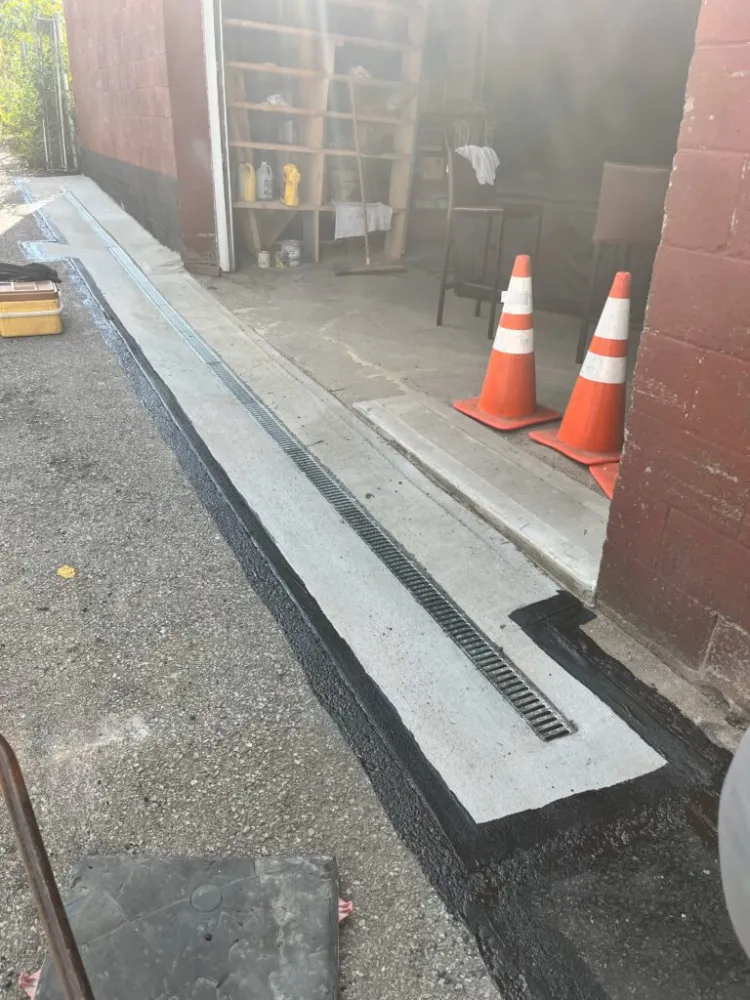
Real Application Example
In Lawrenceville, a property experiencing recurring basement seepage had previously relied on surface drainage improvements. However, the issue persisted due to subsurface water movement beneath the foundation.
After redesigning the drainage system and directly addressing groundwater flow, moisture intrusion decreased significantly.
In another case involving Pittsburgh French drains installation, improper slope design caused water pooling near a garage slab, accelerating concrete wear and increasing humidity inside the structure.
Long-Term Benefits Beyond Water Control
While the primary function of a French drain is water management, its secondary benefits include structural preservation and protection of property value.
Key advantages include:
- Reduced foundation stress
- Improved basement dryness
- Extended concrete lifespan
- Healthier indoor air quality
- Better landscape stability
- Reduced maintenance costs
For homeowners focused on asset preservation, drainage improvements often deliver long-term financial benefits by preventing expensive repairs.
Automotive and Garage Protection Benefits
Moisture control plays a critical role in protecting garage environments and stored vehicles.
Benefits include:
- Lower humidity levels inside garages
- Reduced corrosion risk for vehicles
- Improved concrete slab stability
- Less water intrusion during storms
- Cleaner storage environments
Proper drainage is especially important for luxury vehicle owners and collectors who require controlled indoor conditions to preserve their vehicles.
Lifespan and Maintenance Expectations
A well-installed French drain can remain functional for decades with minimal upkeep.
Expected lifespan:
- 25–40 years, depending on soil conditions
- Extended durability with proper filtration layers
- Long-term performance with routine inspection
Maintenance recommendations:
- Inspect drainage outlets periodically
- Keep gutters and downspouts clear
- Monitor soil settlement areas
- Ensure discharge paths remain unobstructed
Common Misconception About French Drains
Myth: A French Drain Solves Every Water Problem
While highly effective, a French drain is not a standalone solution for all moisture issues. Water management is a system-based challenge that often involves multiple contributing factors.
These include:
- Roof runoff direction
- Surface grading conditions
- Soil saturation levels
- Drainage discharge capacity
- Seasonal rainfall variations
Ignoring these elements can reduce system effectiveness even if installation is correct.
Why Proper Engineering Determines Success
The difference between a successful system and a failing one often comes down to design precision.
Critical engineering factors:
- Accurate trench slope calculation
- Correct pipe sizing
- Proper discharge location
- Adequate gravel depth
- Filter fabric installation
This is why homeowners often seek Pittsburgh, PA, french drains installation services to ensure systems are designed for local environmental conditions and long-term performance.
About TC Foundation Pros LLC
TC Foundation Pros LLC specializes in foundation repair, waterproofing, and drainage solutions designed to address water intrusion at its source. Their approach focuses on structural evaluation, groundwater behavior analysis, and engineered drainage systems tailored to each property’s conditions.
Why Homeowners Invest in Professional Drainage Solutions
Most homeowners seek drainage solutions after experiencing recurring moisture problems, foundation concerns, or landscape water retention. In these cases, professional evaluation is essential to ensure the root cause is addressed rather than just surface symptoms.
Homeowners often begin their search with french drains installation when looking for long-term, engineered drainage solutions that go beyond temporary fixes.
In Summary
A French drain is one of the most effective long-term solutions for managing groundwater, protecting structural integrity, and improving overall property stability. When properly designed and installed by professionals such as TC Foundation Pros LLC, it reduces hydrostatic pressure, prevents moisture intrusion, and supports both residential and automotive asset protection.
For professional drainage evaluation and customized solutions, contact us to schedule an assessment and protect your property from long-term water damage.
People Also Ask
What does a French drain do?
It redirects groundwater away from foundations to reduce water intrusion and structural damage.
How long does installation take?
Most residential installations take 1–3 days depending on site conditions.
Can French drains prevent basement flooding?
Yes, they significantly reduce risk by controlling groundwater before it reaches the foundation.
Do French drains require maintenance?
Minimal maintenance is needed, mainly outlet inspection and surface drainage upkeep.