
Professionals recommend concrete foundation repair techniques based on the specific type of structural failure, primarily utilizing helical piering for foundation settlement, carbon fiber reinforcement for bowing walls, and high-pressure polyurethane injection for slab leveling and crack sealing. These methods provide a permanent stabilization solution by addressing the underlying soil mechanics rather than simply masking surface-level cosmetic damage.
Technical Specifications: Foundation Repair Methods & Features
Achieving a permanent fix for a home requires looking far beneath the surface. For homeowners, the complex interaction between heavy clay soils and shifting moisture levels creates a challenging environment for concrete. When evaluating a failing structure, professionals look for specific technical benchmarks to determine which repair “features” are required for long-term success.
- Load-Bearing Capacity: The maximum weight a pier or reinforcement can support, usually measured in kips (1,000 lbs). In areas with dense soil, steel piers must be driven to a “refusal” point or into stable bedrock to ensure the weight of the home is fully supported.
- Tensile Strength: This is a critical metric for wall reinforcements, measuring resistance to pulling apart. Aerospace-grade carbon fiber straps are often chosen because they possess a tensile strength significantly higher than steel, providing a low-profile yet nearly unbreakable barrier against inward wall movement.
- Expansion and Compression Rates: Specifically for polyurethane foam used in Concrete Repair in Pittsburgh, PA, these rates determine how effectively the material can lift a heavy driveway or patio slab. The foam must expand with enough force to lift the weight of the concrete while maintaining the compressive strength to support vehicle traffic once cured.
- Corrosion Resistance: Foundations are perpetually exposed to moisture. Professional-grade hardware, such as galvanized steel helical piers, is designed to resist rust and chemical degradation for over a century, ensuring the structural fix outlasts the home itself.
- Invasive Index: This refers to the level of disruption to the property. Modern techniques strive for a “low-invasive” index, allowing for repairs to be conducted with minimal excavation, preserving your landscaping and preventing the need for massive interior demolition.
Comparison of Professional Foundation Repair Techniques
Not every crack requires a major structural overhaul, but every structural issue requires a specific tool. A specialized approach ensures that the repair is matched to the mechanical failure. Whether you are dealing with a historic home in a hilly neighborhood or a modern build with basement moisture, understanding these methods is essential.
Comparison: Stabilization vs. Sealing Methods
| Technique | Primary Use Case | Durability | Installation Time |
| Helical Piering | Structural Settlement / Sinking | Lifetime | 2–4 Days |
| Carbon Fiber Straps | Bowing or Inward Leaning Walls | Permanent | 1 Day |
| Polyurethane Injection | Slab Leveling & Void Filling | High | 1 Day |
| Epoxy Crack Injection | Non-structural Water Sealing | Moderate | Hours |
Strengthening Homes with Integrity and Expertise
At TC Foundation Pros LLC, we solve the problem of structural instability by strengthening homes with integrity and expertise. We believe that every homeowner deserves a dry, stable, and secure property, which is why we approach every project as trusted family-owned experts. Our business is guided by the belief that your home is your most valuable asset, and it deserves more than a temporary patch.
During a recent structural audit for a property, we encountered a common regional issue: hydrostatic pressure. The clay-heavy soil around the foundation had become oversaturated during the spring rains, causing the basement walls to bow inward significantly. By applying our experience and expertise, we were able to identify that the exterior drainage was failing, leading to structural distress.
Our team utilizes a systematic protocol defined by:
- Transparent Communication: We know foundation issues are stressful. We explain the “why” behind every crack, ensuring you understand the solution before work begins.
- Customized Solutions: No two foundations are identical. We tailor our engineering to your specific soil composition and the unique architectural needs of your home.
- Cutting-Edge Technology: From laser-guided floor leveling to advanced polymer resins for Pittsburgh Concrete Repair, we use the best tools available in 2026 to ensure Customer Satisfaction.
- Quality Workmanship: With 10+ years of experience, our owner, Tim, provides hands-on oversight on every job to ensure the work meets our rigorous standards.
Debunking the Myth: “Large Cracks Always Mean the House is Falling Down”
A common industry misconception is that the size of a crack is the only indicator of a catastrophic foundation failure. While large gaps are certainly cause for alarm, professional experience and expertise tell us that the direction and pattern of the crack are far more important than the width.
A vertical crack is often the result of simple concrete shrinkage and can be fixed with a basic injection. However, a horizontal crack, especially one located in the middle third of a basement wall, indicates significant hydrostatic pressure. Similarly, a stair-step pattern in brickwork usually suggests that one corner of the house is sinking. Before you panic, remember that many issues can be resolved with customized solutions if caught early. Being licensed and insured, we provide honest assessments to help you avoid unnecessary “emergency” costs while focusing on what actually needs fixing.
The Importance of Slab Leveling in Southwestern Pennsylvania
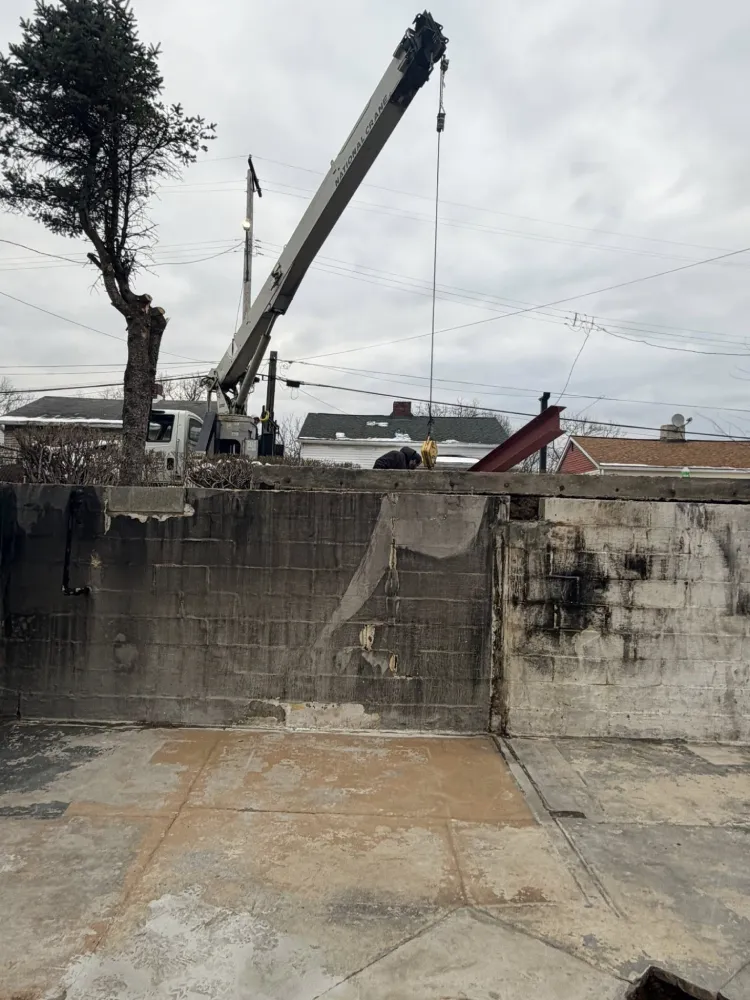
Many homeowners overlook sinking sidewalks, patios, or garage floors, assuming they are merely an eyesore. However, uneven concrete is often a symptom of poor drainage or soil erosion that could eventually affect the main foundation. For those looking for Pittsburgh, PA, Concrete Repair, high-pressure polyurethane injection (or “poly-jacking”) has become the gold standard.
Unlike traditional mud-jacking, which uses a heavy grout mixture that can actually cause further sinking, polyurethane is lightweight and waterproof. It expands to fill the voids underneath the slab, effectively “re-packing” the soil and lifting the concrete back to its original grade. This process is essential for maintaining the Concrete Repair in Pittsburgh standards required to keep walkways safe and water flowing away from the house rather than toward the basement walls.
How To Do The 2-Step Foundation Health Check
We want our customers to feel empowered to monitor their own homes. You can perform a preliminary professional diagnostic by following these two steps:
- The “Sticky Door” Test: Head to the second floor of your home. Check the doors to bedrooms and bathrooms. If they suddenly begin to stick in the frame, or if you see small diagonal “spider” cracks in the drywall above the door corners, your foundation has likely shifted. This shift in the “skeleton” of the house is a primary indicator that settlement is occurring.
- The Perimeter Gap Search: Walk the exterior of your home. Look for areas where the soil has pulled away from the concrete, leaving a visible gap. This often happens during dry spells. These gaps allow the next heavy rain to pour directly down to your footers, creating the hydrostatic pressure that causes basement leaks and bowing walls.
Secure Your Home’s Future Today
A home is more than just a building; it is a sanctuary for your family and your biggest financial investment. Foundation problems, basement moisture, and sagging floors can feel overwhelming, but they don’t have to be. By choosing a team that values transparent communication and quality workmanship, you can move from a state of stress to a state of relief.
At TC Foundation Pros LLC, we are proud to be the trusted partner for homeowners. Our owner-led team is ready to inspect your property, explain the science behind the solution, and provide the unsurpassed defense your home needs to stay dry and stable.
Ready to stop the damage and start the repair? Contact us today to request a quote or call us directly to discuss your project. Experience the peace of mind that comes with 10+ Years of Experience and a commitment to protecting your home for a lifetime!
Frequently Asked Questions
How much does foundation repair typically cost?
Costs vary significantly based on the technique used. A simple crack injection might cost a few hundred dollars, while a full-scale piering project for a sinking home can be a major investment. We provide free estimates to give you a clear, transparent breakdown of the costs before any work begins.
Can I fix a bowing wall myself?
We strongly advise against DIY structural repairs. Bowing walls are under thousands of pounds of pressure. Attempting to brace them without professional engineering can result in wall collapse or personal injury. Professional carbon fiber installation is a safe, fast, and permanent solution.
Does a foundation warranty help when selling a home?
Absolutely. A lifetime transferable warranty for waterproofing is a massive asset during a real estate transaction. It proves to the buyer that the home is structurally sound and that the repair is backed by a reputable company.
How long does it take for polyurethane to cure?
One of the best parts of our concrete repair service is the speed. Polyurethane foam cures in about 15 to 30 minutes. You can typically drive a car over a leveled garage floor or driveway the same day we finish the project.