
French drains are built to help your property handle excess water, whether from heavy rain or melting snow in the spring. They work by guiding water away from areas that are prone to flooding, protecting your yard from puddles, preventing soil erosion, and keeping your home’s foundation safe. When installed correctly and cared for over time, they can handle sudden bursts of water and keep your property running smoothly.
Understanding the Basics of French Drains
A French drain is a gravel-filled trench with a perforated pipe that directs water away from areas prone to saturation. Its purpose is to keep water from collecting near structures, low spots, or landscaped areas. Because it works below the surface, it offers a more effective long-term solution than basic surface drainage.
Core Components
A French drain relies on several essential components:
- Perforated Pipe
This pipe is the core of the system. Water enters through small holes along its length and moves by gravity to the outlet. Choosing a durable pipe ensures long-term performance and prevents collapse or corrosion. - Gravel or Aggregate Layer
Surrounding the pipe, gravel creates spaces that allow water to flow freely. It also filters out larger debris and prevents soil from entering and clogging the pipe. - Geotextile Fabric
The fabric acts as a barrier between soil and gravel, letting water pass while keeping sediment out. This helps maintain the long-term efficiency of the French drain. - Outlet or Drainage Point
The outlet is the point at which water exits the system. It must be positioned at a lower elevation than the starting point to allow gravity to carry the water away effectively.
By combining these elements, French drains create a reliable pathway for excess water, especially during heavy precipitation or seasonal snowmelt.
How French Drains Handle Heavy Rainfall or Spring Thaw
French drains are most effective when built to handle extreme weather conditions. Heavy rain or rapid snowmelt can overwhelm standard systems, but these setups are designed to manage large volumes of water efficiently.
Water Collection
When rain or melting snow saturates the ground, water tends to collect in low areas, near foundations, or along slopes. French drains intercept this water before it causes damage, directing it safely away from the property. During a recent audit for a commercial property in Pittsburgh, PA, the system successfully prevented water from pooling around the building foundation, demonstrating its effectiveness even under intense rainfall.
Flow Direction
The perforated pipe channels water along a slight downward slope toward the outlet. Even a small decline is enough for gravity to move water efficiently. Proper alignment is critical—incorrect slope or obstacles along the path can reduce performance and cause backups.
Filtration and Sediment Control
Gravel and geotextile fabric work together to filter debris. This prevents soil and sediment from clogging the pipe, a common problem in areas with clay-heavy or silty soils. Regular inspection is necessary to ensure the system remains unobstructed, particularly after winter thaw or heavy storms.
Temporary Water Storage
The trench itself acts as a temporary reservoir, holding water until it can drain through the pipe. This feature is particularly helpful during sudden snowmelt or prolonged rainfall, reducing immediate surface runoff and preventing flooding. In Pittsburgh, PA, property owners with yards prone to seasonal flooding found that French drains could handle excess water without affecting landscaping or hardscape features.
Comparison Table – Performance Under Different Conditions
| Condition | Efficiency of French Drain | Notes |
| Light Rain | High | Minimal saturation; drains handle water easily |
| Heavy Rain | Moderate to High | Performance depends on slope and outlet clearance |
| Spring Thaw | High | Effective if the outlet is clear and the pipe is unobstructed |
| Clay-heavy Soil | Moderate | Slower infiltration; may require wider or deeper trench |
| Sandy Soil | Very High | Rapid water movement; minimal risk of overflow |
This table highlights that, while French drains are versatile, their performance varies with soil type, precipitation, and system design. Understanding these factors is crucial for designing a reliable drainage system.
Step-by-Step Process of Handling Excess Water
- Water enters the trench
Surface runoff or groundwater seeps into the trench through gravel and perforations in the pipe. - Gravel layer filters sediment
The gravel traps larger particles and prevents soil from clogging the pipe. - Pipe transports water
Gravity moves the collected water along the sloped trench toward the outlet. - Outlet releases water
Water exits safely away from structures or low-lying areas, preventing pooling and erosion. - Maintenance
Regular inspections ensure the trench remains free of debris and the outlet is not blocked.
Applying This to Solve Water Problems
Implementing a French drain requires careful planning, precise installation, and ongoing upkeep.
Assess the Site
Identify areas prone to water accumulation, such as low-lying yards, slopes near foundations, or spaces where water runoff converges. Effective assessment is critical to ensure the drain captures the maximum volume of water.
Design the Drainage Path
The trench should slope toward a suitable outlet. Even a small gradient ensures continuous water movement. Avoid flat or uphill designs, which can trap water and reduce the system’s effectiveness.
Select Materials
Durable perforated pipes and properly sized gravel are essential. Geotextile fabric helps prevent sediment from entering the pipe, which is especially important in areas with fine soils. In Pittsburgh, professional teams noted that carefully choosing materials increased long-term reliability during both spring thaw and heavy rain events.
Installation
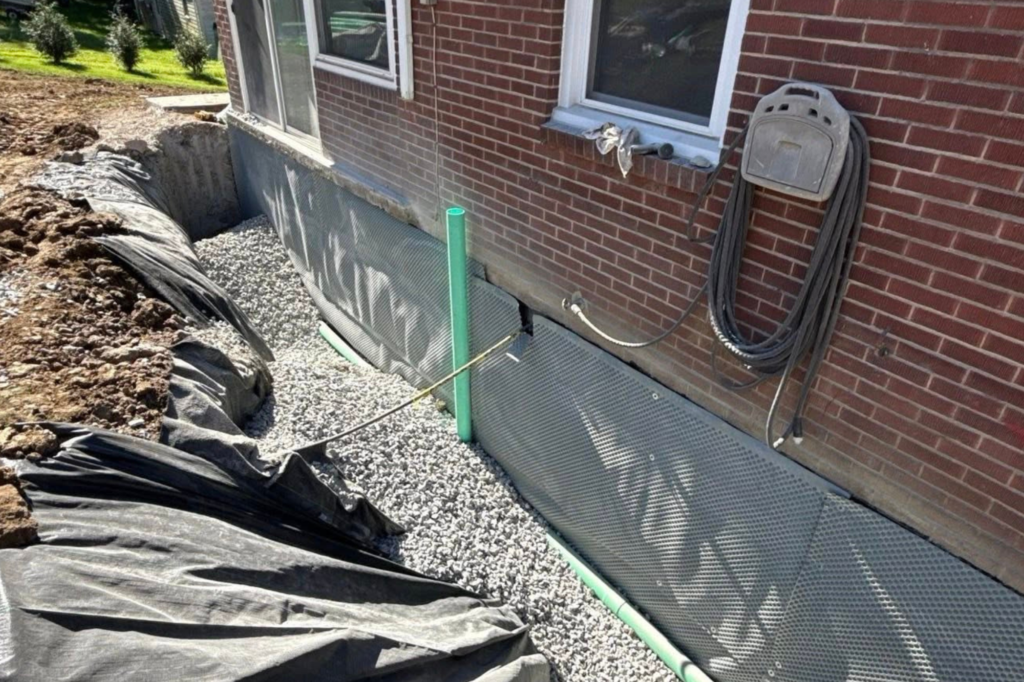
Excavate the trench to the proper depth and slope. Lay the geotextile fabric first, then add gravel, place the perforated pipe, and cover with additional gravel and topsoil. A correctly installed French drain can handle large water volumes efficiently and reduce the risk of localized flooding.
Maintenance
Inspect inlets, outlets, and trenches regularly. Remove debris such as leaves, sediment, or roots to prevent blockages. Maintenance is particularly important after the winter season, when melting snow can carry extra debris into the system.
Optional Enhancements
Adding catch basins, dry wells, or multiple interconnected drains can further increase capacity. A property owner improved drainage by connecting several French drains to a single outlet, thereby distributing water more evenly and preventing overflow.
Example of Keyword Integration
By following best practices in French drain installation in Pittsburgh, PA, property owners can maximize water control. Careful planning ensures that the system handles both heavy rainfall and seasonal thaw effectively without damaging landscaping or structures.
Debunking a Common Industry Myth
Myth: French drains eliminate all water problems permanently.
Reality: While French drains are effective at redirecting water, they do not prevent flooding if precipitation exceeds the system’s capacity or if outlets are blocked. Proper slope, outlet placement, and routine maintenance are critical for long-term functionality. A commercial property learned that even well-designed french drains in Pittsburgh, PA, required seasonal maintenance to perform optimally during the spring thaw.
Another misconception is that French drains are a one-size-fits-all solution. In reality, soil type, trench depth, and pipe diameter must be tailored to the property’s drainage needs. Ignoring these factors can result in underperforming systems.
In Summary
At TC Foundation Pros LLC, French drains are a reliable solution for managing water during heavy rain and spring thaw. By directing excess water away from vulnerable areas, they help prevent pooling, erosion, and potential structural damage. Their effectiveness comes down to careful planning, the right materials, proper installation, and ongoing maintenance. For homeowners and property managers, they offer a dependable way to handle seasonal water challenges and protect your property for the long term.
Implementing Pittsburgh french drains installation ensures proper slope, trench depth, and outlet placement, making them highly effective in preventing flooding. Property owners who invest in maintenance can keep their systems functioning efficiently for years. Contact us today to schedule your consultation and protect your property from water damage!
People Also Ask
How deep should a French drain be for heavy rainfall?
A trench must be deep enough to collect surface runoff while maintaining proper slope. Depth depends on soil type, expected water volume, and drainage path.
Can French drains handle spring thaw snowmelt?
Yes, French drains are designed to handle both rainfall and snowmelt. Proper installation ensures water flows to the outlet efficiently.
Do French drains require maintenance?
Yes, regular inspection and debris removal are essential to maintain performance and prevent clogging.
Will a French drain stop basement flooding?
French drains reduce water accumulation around foundations, but cannot guarantee complete flood prevention if the water volume exceeds the system’s capacity or the outlet is blocked.
Is French drain installation suitable for clay-heavy soil?
Yes, but drainage may be slower. Wider trenches or additional drainage measures can improve effectiveness in clay-rich areas.