

Foundation repair is critical for exterior brick cracks near house corners because corner masonry acts as a primary structural pivot where differential settlement, footing movement, and lateral soil pressure concentrate stress. Left unaddressed, corner cracking indicates underlying foundation shifting that can widen into structural separation, water intrusion, brick spalling, and costly framing or roof damage. Addressing the root structural or drainage cause early preserves your home’s stability, safety, and long-term value.
Structural Mechanics Behind Corner Brick Cracks
When a house is built, its weight travels downward through framing, wall plates, and exterior masonry onto the concrete foundation and footings below. House corners occupy a unique structural position: two intersecting walls meet at a 90-degree junction while two separate zones of soil support the ground beneath them. Any imbalance in how those soils expand, shrink, or compress places intense mechanical stress right at the corner.
When homeowners research foundation repair in Greensburg, PA, they often notice stair-stepped mortar lines or vertical brick fractures near a front porch or garage corner long before cracks appear anywhere else. Understanding why corners crack helps explain why surface patching alone rarely solves the problem.
Corner Stress Concentration and Differential Movement
Two primary forces drive corner brick damage around residential properties:
- Two-Wall Convergence & Shear Forces: Intersecting exterior walls tie together at corners where soil moisture levels and bearing capacities can differ from one side of the house to the other. If one footing settles slightly lower than the adjacent section, or if expansive soil pushes inward on one wall, shear and tensile stresses concentrate sharply at the corner joint.
- Moisture Entry and Freeze-Thaw Expansion: Once a crack opens in brick or mortar near a corner, rainwater, melting snow, and wind-driven moisture slip behind the exterior veneer. When temperatures drop below freezing, trapped water expands by roughly nine percent, wedging mortar joints wider and flaking or spalling the face of the brick.
Step-by-Step Evaluation and Repair Process for Corner Movement
Correcting corner masonry cracking safely and permanently requires following a structured sequence rather than jumping straight to cosmetic repairs:
- Structural & Soil Assessment: Inspecting crack width, crack pattern (stepped, vertical, or diagonal), interior door and window operation, drywall seams, and exterior yard grading to pinpoint whether movement is active or historical.
- Load-Bearing Stabilization: Installing engineered support systems, such as push piers or helical piers anchored into deeper, load-bearing soil strata or bedrock, where footing settlement is driving wall movement.
- Drainage & Moisture Mitigation: Redirecting roof downspouts, re-grading surface slopes away from the house, and managing perimeter water so saturated or expansive soil stops exerting lateral pressure against foundation walls.
- Masonry Restoration & Repointing: Removing cracked bricks or deteriorated mortar and tuckpointing with compatible masonry mortar once the underlying foundation is stabilized.
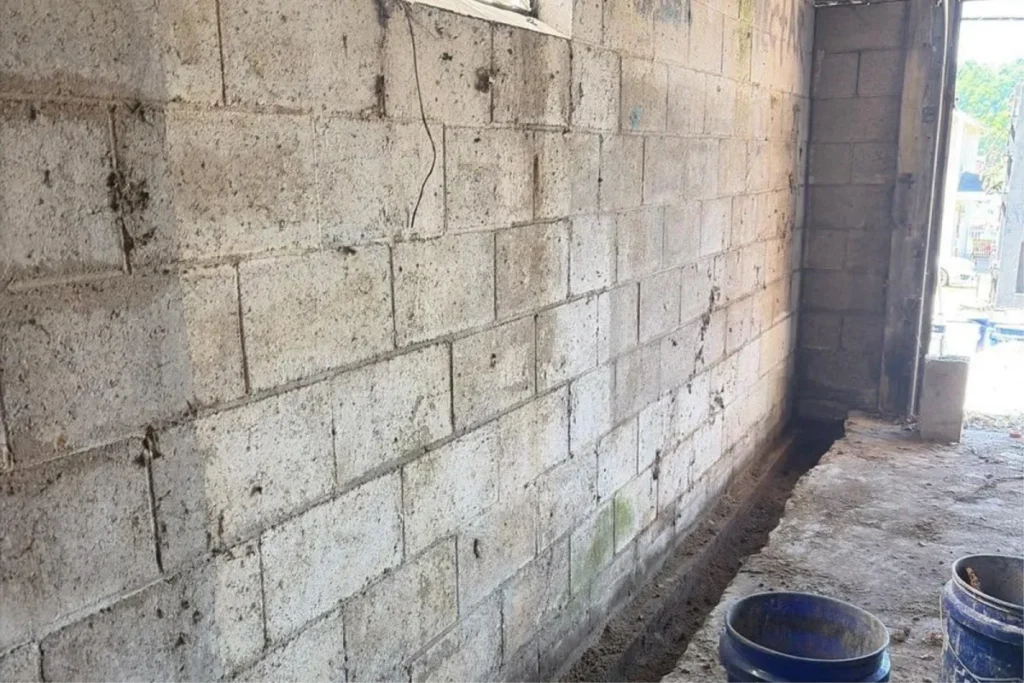
Corner Brick Cracking: Structural Settlement vs. Surface Wear
Not every crack near a corner signals catastrophic foundation failure, nor should every crack be brushed off as normal settling. Comparing active footing movement against localized masonry wear helps clarify what a given crack pattern actually means.
Diagnostic Indicators Across Crack Types and Severity
| Diagnostic Factor | Active Foundation / Footing Movement | Localized / Cosmetic Masonry Wear |
| Crack Width & Progression | Widening over time (often greater than 1/8″ to 1/4″) or tapering | Hairline, stable mortar separation with no ongoing growth |
| Crack Path | Stepped along mortar joints, cutting through bricks, or near corners | Narrow hairline follow-along along a single mortar line |
| Associated Home Clues | Sticking doors/windows, interior drywall cracks, sloping floors | Isolated weathering from aging mortar or minor thermal expansion |
| Water & Moisture Risk | High risk of wall seepage, crawl space moisture, and structural shift | Low structural risk unless unsealed joints admit wind-driven rain |
| Primary Remedy | Foundation stabilization, drainage control, and masonry repair | Targeted mortar repointing and routine moisture maintenance |
Applying Our Core Standards to Solve Corner Brick Cracking
At TC Foundation Pros LLC, we are dedicated to protecting the safety, stability, and long-term value of your home with honest guidance and dependable workmanship. Whether you live in Pittsburgh, Mount Lebanon, or nearby communities, our team brings together 10+ years of experience, free estimates, and a lifetime transferable warranty for waterproofing to give homeowners lasting confidence.
Our work is centered on strengthening homes with integrity and expertise, combining deep experience and expertise with quality workmanship and licensed and insured field execution. Because every home’s soil profile, footing depth, and drainage layout is unique, we design customized solutions backed by cutting-edge technology to address underlying settlement and moisture rather than masking surface symptoms.
Throughout the process, we emphasize transparent communication so you know exactly what we see, why a particular solution is recommended, and how every step protects your property. Above all, customer satisfaction guides how we treat your home and family from the first inspection through project completion. Homeowners seeking dependable foundation repair in Greensburg can count on a thorough, pressure-free evaluation focused on permanent stability.
Debunking the “Just Tuckpoint the Bricks” Myth: Why Cosmetic Patching Fails
Industry Myth: “Filling or tuckpointing a cracked brick corner with fresh mortar is all you need to fix the problem permanently.”
The Reality: Mortar is a rigid bonding material designed to hold masonry units together and shed weather; it is not a structural foundation anchor. If the underlying footing is settling downward or saturated soil is pushing outward on the wall, fresh mortar placed over an active crack will simply split or crumble again as movement continues.
Lasting repair requires addressing the root structural or water-management cause first, and then restoring the brick and mortar cleanly once the foundation is stable. Relying on Greensburg foundation repair specialists who diagnose both movement and moisture keeps small corner cracks from turning into major structural repairs.
Protect Your Home’s Corner Strength and Long-Term Stability
Exterior brick cracks near a house corner are an important early clue that deserves careful attention before minor shifting turns into broader structural movement or moisture intrusion. At TC Foundation Pros LLC, our friendly, knowledgeable specialists take pride in helping homeowners across Greensburg, PA feel secure and reassured knowing their biggest investment is in capable hands.
If you have spotted corner brick cracks, uneven grading, or signs of moisture around your foundation, we invite you to reach out for a free consultation and inspection. Contact us today to discuss your concerns and get clear, expert answers on foundation repair!
Frequently Asked Questions
Are brick cracks near the corner of a house always a foundation problem?
Not every crack near a corner indicates severe structural failure, minor hairline mortar cracks can occur from thermal expansion or normal material curing. However, cracks that are widening, cutting through bricks, or appearing in a stair-step pattern near corners are classic warning signs of footing movement or soil shifts that should be inspected promptly.
Can water intrusion make corner brick cracks worse over time?
Yes. Water entering open cracks and saturating soil around foundation corners increases soil weight and lateral pressure, while freezing temperatures expand trapped moisture and widen masonry fractures.
How quickly should exterior brick cracks near a house corner be evaluated?
Any crack that is widening, stepping through masonry joints, or accompanied by sticking doors, interior drywall cracks, or basement or crawl space dampness should be evaluated promptly before minor movement progresses into larger structural or water damage.
Does foundation stabilization fix brick veneer that has already separated?
Stabilizing the foundation stops ongoing settlement or movement, so the damage does not worsen, while separated or damaged brick courses typically require targeted masonry repair, resetting, or repointing once the structure is stabilized.