
Your basement needs waterproofing to mitigate hydrostatic pressure, prevent masonry decay, and block hazardous mold growth caused by vapor migration. Even without standing water, porous concrete foundation walls act like a sponge, absorbing groundwater through capillary action. This leads to structural “spalling,” foundation cracks, and degraded indoor air quality, which compromise your home’s long-term market value.
While a dry floor might suggest your home is secure, moisture operates on a microscopic level. For homeowners, recognizing the “hidden” threats of soil saturation is the difference between maintaining a sound structure and facing five-figure foundation stabilization repairs.
At TC Foundation Pros LLC, we bring 10+ years of experience as a family-owned company delivering customized solutions with cutting-edge technology. We are fully licensed and insured, committed to protecting your home with trusted expertise.
The Invisible Threat: Why “Dry” Doesn’t Mean “Safe”
Many homeowners assume that waterproofing is only necessary for houses in flood zones or those with a history of mechanical failures. However, the primary enemy of your foundation is not a storm, but the constant presence of groundwater and soil moisture.
Concrete is not a solid barrier; it is a porous, mineral-based material. Through a process called capillary suction, liquid water and water vapor travel through the microscopic pores of your foundation walls. This increases the relative humidity of the entire home, often leading homeowners to seek professional basement waterproofing in Pittsburgh services long before a major rain event occurs.
Understanding Hydrostatic Pressure
As the soil surrounding your home becomes saturated with rain or snowmelt, the weight of that water exerts immense force against your foundation walls. This is known as hydrostatic pressure. Even if the water doesn’t “leak” through in a visible stream, the pressure can force moisture through the block’s pores, weakening the mortar joints and eventually causing the wall to bow inward.
Comparison: Sudden Flooding vs. Gradual Moisture Intrusion
| Feature | Hydrostatic Seepage (Invisible) | Surface/Flash Flooding (Visible) |
| Primary Driver | High water table & soil saturation. | Rapid snowmelt or heavy downpours. |
| Early Warning | Efflorescence or musty, heavy air. | Visible pooling or sump pump failure. |
| Structural Impact | Masonry “spalling” and rebar oxidation. | Immediate erosion and electrical risks. |
| Health Risks | Chronic respiratory triggers (mold). | Immediate pathogen exposure. |
| Solution Focus | Vapor barriers & soil moisture control. | High-volume discharge & grading. |
Export to Sheets
During a recent structural assessment in Shadyside, we analyzed a home with bone-dry floors but measured 85% relative humidity behind the finished basement walls. This “hidden” moisture had already begun to rot the timber framing’s bottom plates.
Technical Indicators: Signs You Need Waterproofing
If you notice these specific indicators, your foundation is likely already under stress. Proactive identification can save thousands in remediation costs.
- Efflorescence (Salt Deposits): This white, crystalline, or powdery deposit is a sign that water is actively moving through your masonry.
- Hydrostatic Cracking: Horizontal or “stair-step” cracks in your masonry suggest that soil pressure outside the wall exceeds the wall’s load-bearing capacity.
- Hygroscopic Material Failure: Peeling paint or “bubbling” drywall indicates that moisture vapor is trapped behind your interior finishes.
- Air Quality Degradation: A persistent musty odor is a byproduct of microbial volatile organic compounds (mVOCs) produced by mold, a common issue we remediate in Squirrel Hill.
- Thermal Inefficiency: Damp air requires significantly more energy to heat and cool. Proactive basement waterproofing in Pittsburgh, PA, often results in lower monthly utility overhead and increased HVAC longevity.
Debunking the “Waterproof Paint” Myth
The Misconception: “Applying a heavy-duty masonry sealer or ‘waterproof paint’ from a big-box store will solve my dampness issues.”
The Reality: Topical sealants are a cosmetic Band-Aid, not a structural solution. These products create a thin film that attempts to hold back thousands of pounds of pressure. Eventually, the water pressure forces the coating to blister and fail.
More dangerously, trapping water inside the concrete wall can accelerate the “freeze-thaw” cycle. When trapped water freezes, it expands, causing the concrete’s internal structure to crumble (spalling). Authentic Pittsburgh basement waterproofing focuses on pressure relief, redirecting water away from the foundation before it can exert force on your walls.
Engineering a Multi-Layered Protection System
To truly protect a home, a “defense-in-depth” approach is required. This involves managing water at the exterior, the interior, and beneath the floor slab.
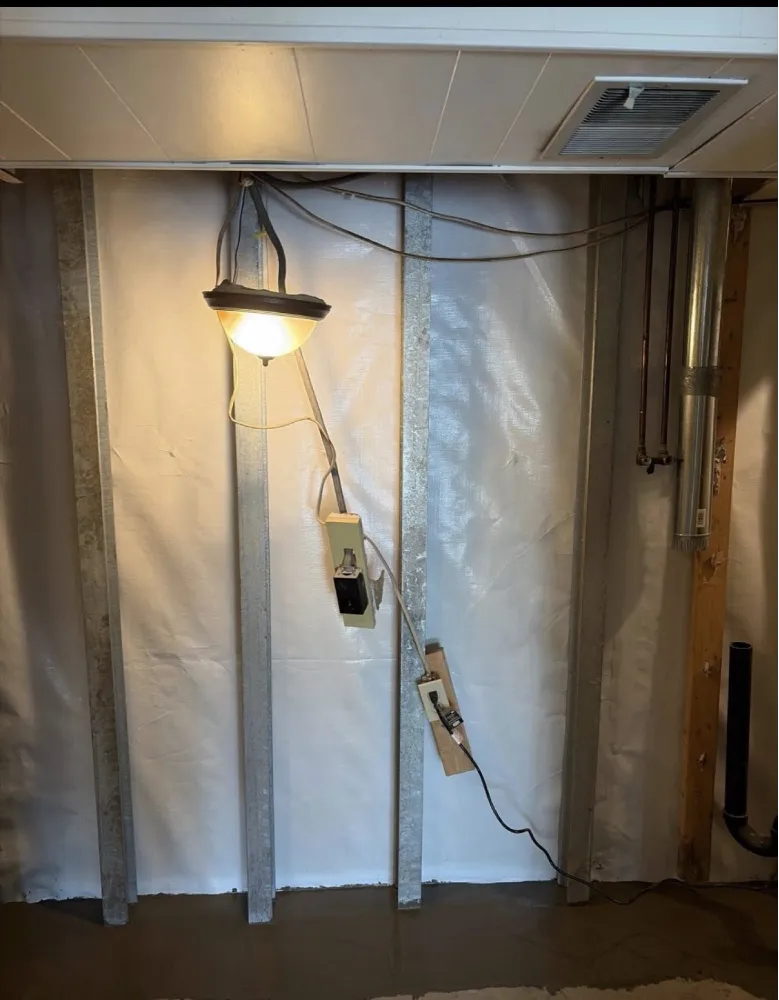
- 20-mil Antimicrobial Vapor Barrier: A high-density polyethylene shield that stops moisture diffusion.
- Sub-Slab Perimeter Drainage: Perforated piping installed at the “footing” level to collect groundwater.
- Dual-Pump Discharge Systems: Redundant sump pumps with battery backups to ensure operation during power outages.
- Industrial Dehumidification: Sized to maintain basement humidity below 50%, starving mold of the moisture it needs.
- Elastomeric Exterior Membranes: A flexible, rubberized coating applied to the exterior foundation to provide a seamless water barrier.
We recently completed a complex foundation wrap for a historic residence in Lawrenceville, where we managed high-volume runoff from the surrounding hillside to preserve the 100-year-old stone masonry. This case study underscores why specialized Pittsburgh PA basement waterproofing requires local geological expertise.
Protect Your Home’s Foundation Today
Your home is likely your largest financial asset; don’t let invisible moisture erode its value from the ground up. At TC Foundation Pros LLC, we provide the technical expertise and high-performance solutions required to keep your basement dry, healthy, and structurally sound.
Ready for a definitive solution? Contact us today for a comprehensive structural evaluation. Let our specialists provide the peace of mind that comes with a professionally waterproofed foundation.
FAQ: People Also Ask
Can I wait until I see water to waterproof?
We advise against it. Moisture often causes structural damage to the sills and joists long before it pools on the floor. Early intervention is significantly less expensive than structural restoration and mold removal.
How does waterproofing affect my home’s air quality?
By controlling the “Stack Effect”, where air from the basement is drawn upward into the living areas, waterproofing reduces the circulation of mold spores, radon, and allergens.
Is an interior or exterior system better?
It depends on the site’s geology. Interior systems are excellent for managing hydrostatic pressure beneath the floor, while exterior systems are the “gold standard” for preventing water from reaching the foundation.
What is the lifespan of these systems?
Systems installed by TC Foundation Pros LLC are engineered for permanence. When maintained, our drainage components and vapor barriers are designed to protect the structure for decades.